
what i did, #3
it was a busy month (or 1.5) with the summer semester kicking off, the berlin heat, and some events. i didn't have a lot of free time, but still managed to have some inspiring input.
nitro kid
i played nitro kid (2022, wild boy studios), a a turn-based isometric rogue-like deck-building game with pixel graphics and 1980s cyberpunk/vaporwave aesthetics.
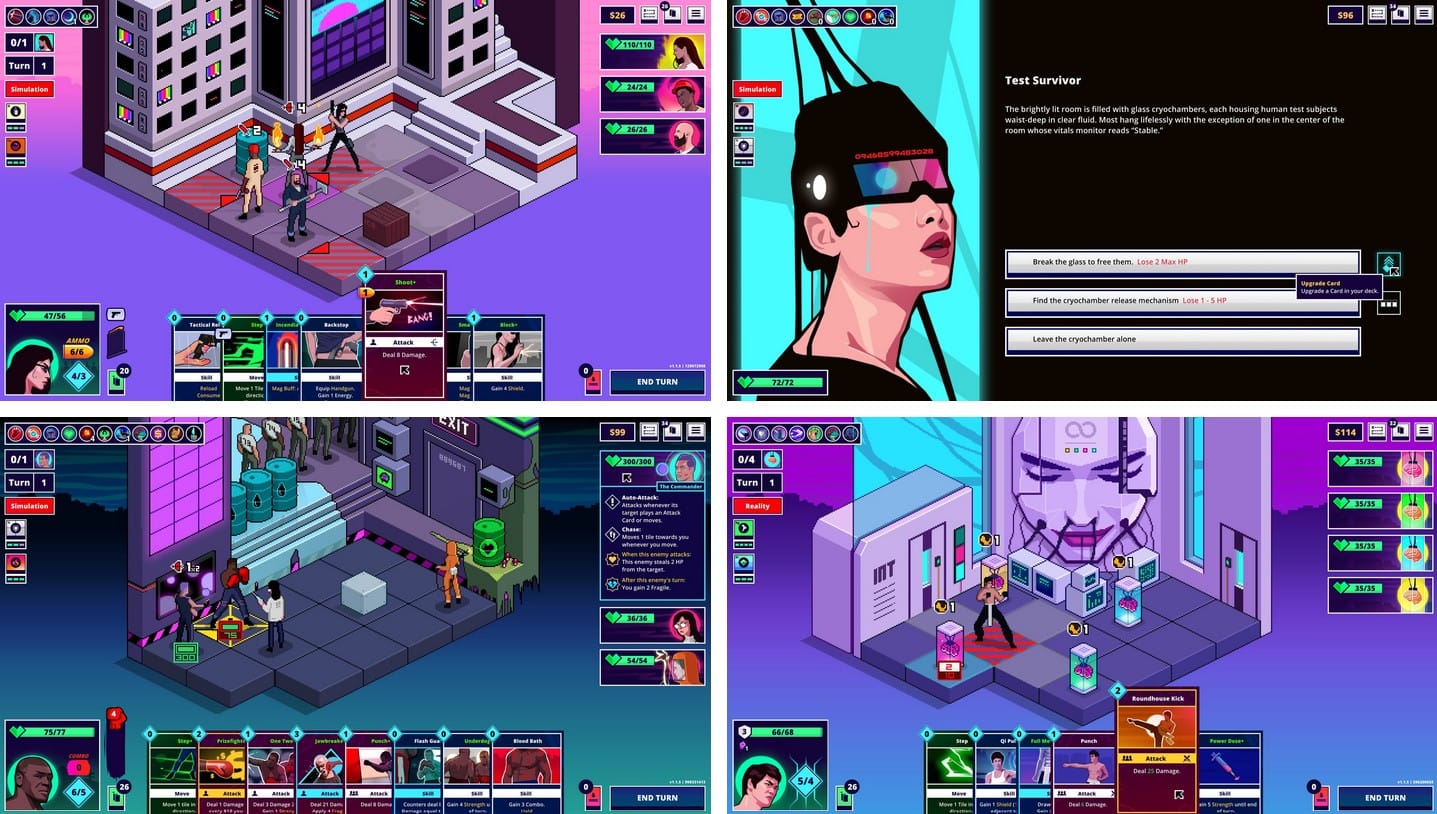
while i mostly enjoyed the game i felt like it didn't offer enough satisfying rewards after i finished a run, so i decided to call it quits after unlocking all of the three agents and playing an additional run. the 11 hours i played were fun though and i especially enjoyed the synthwave soundtrack. what i didn't like were the racist micro aggressions, especially with the Black agent: he is, of course, hypermasculine, and one of his skills is that he can heal himself—by eating a banana (which is used as a skill icon)... not okay! the asian (probably japanese?) agent is also constructed in a stereotypical way, doing martial arts...
the uncertain: light at the end
i loved the first installment of the uncertain (called the uncertain: last quiet day), a narrative adventure puzzle game that came out in 2016, so i was really looking forward to the sequel the uncertain: light at the end (comongames, 2020) although i knew rt-217np, the autistic-coded robot from the first episode, wouldn't be the protagonist.
clearly, a lot of work went into this game: the world-building, the puzzles, and all of those little details the locations and characters had to offer.
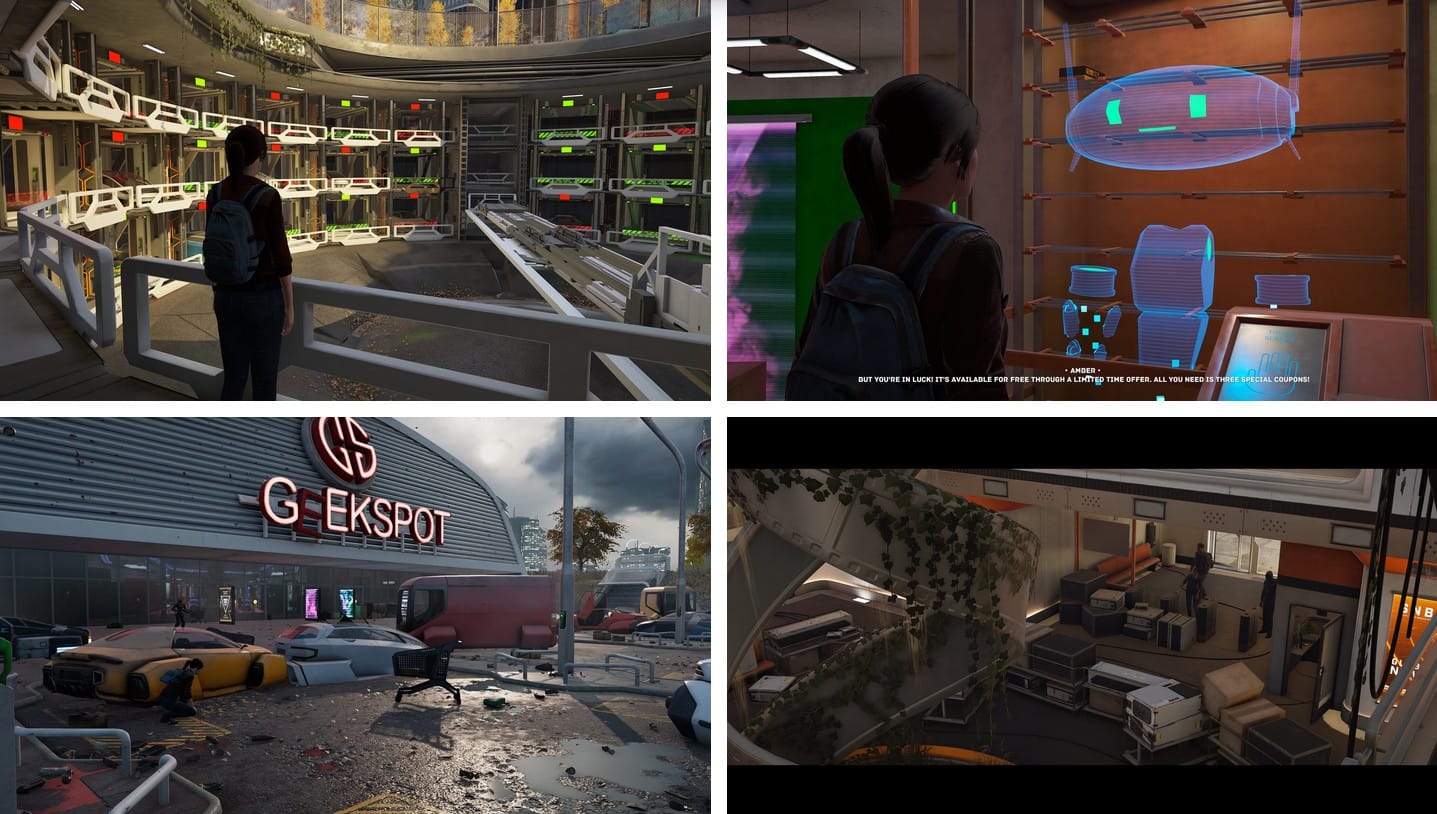
while i enjoyed being in that world again after 9 years (i finished the first episode in july 2017), i was a bit sad that i was playing a non-descript character that didn't offer a lot of backstory or unique features/ideas. but what was worse: i had to spend time with a grumpy sexist macho (there was another one in the crew that i tried to avoid talking to when possible). i think this character was meant to be edgy but it's not really a new phenomenon, so i was just annoyed. that being said, other characters were nice and they had different marginalized backgrounds. still, the writing felt a bit superficial and bland, so i wasn't really invested in the story (unfortunately). and i experienced some graphic bugs, one occurred in the final scenes which kind of ruined the game for me. luckily, there were enough autosaves so i was able to reload an earlier save and that bug didn't occur a second time. i would still play a third episode as the game ended with a cliffhanger and i want to see rt-217np again... but i don't think this will happen: the studio seems to have shifted gears from developing games to offering services.
red embrace: mezzanine
i played red embrace: mezzanine (2021, argent games) which serves as a prequel to red embrace: hollywood, a game i really liked and that has disappeared from the internet (probably due to the payment processor issue in 2025 that led to steam and itch removing nsfw games from their stores). mezzanine isn't nsfw, it's just a short visual novel that gives some backstory to markus/vast. as the other games in the red embrace series it's well-written and has a unique mood.
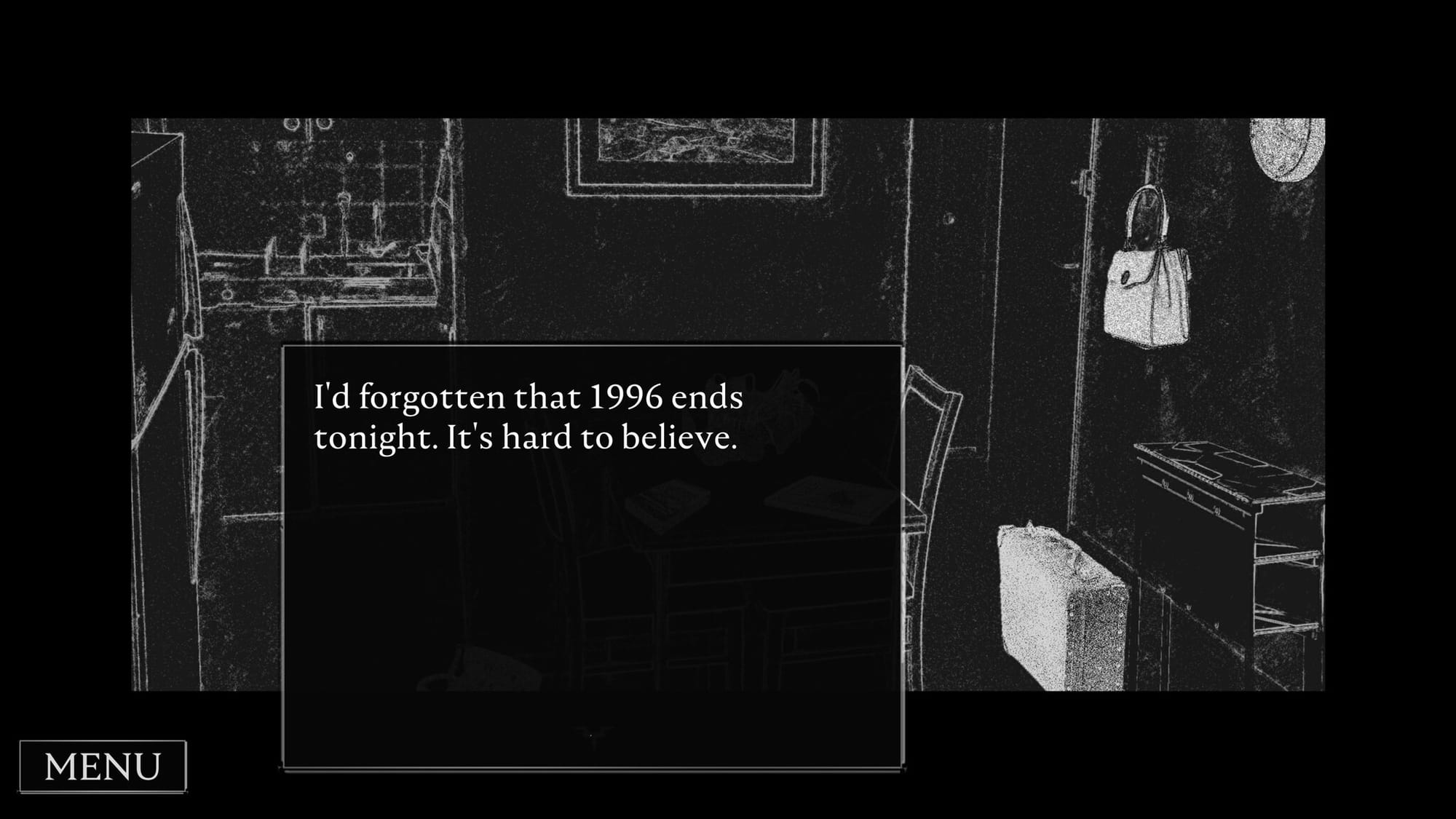
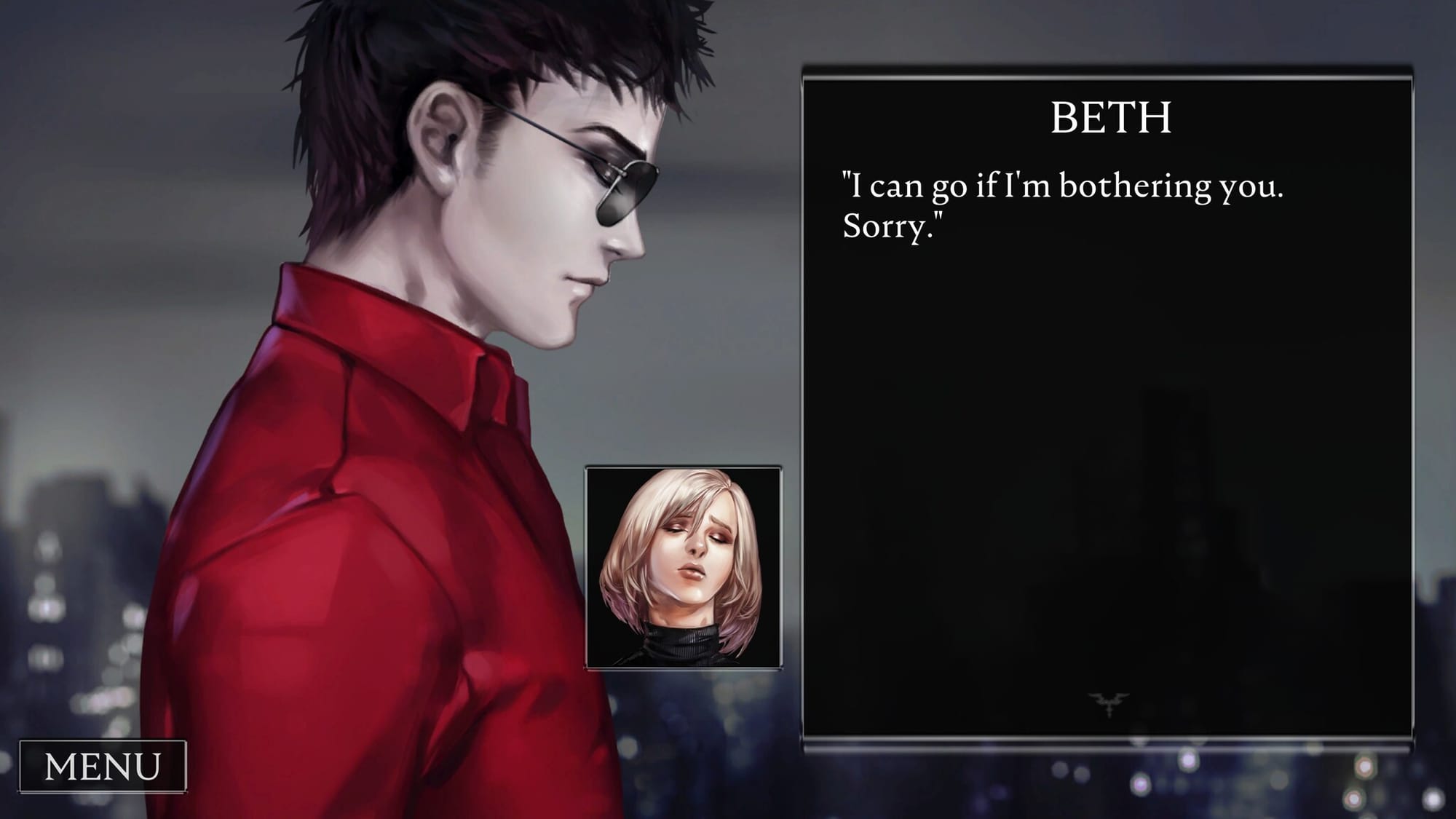
i liked playing through it and played it twice to get both of the endings. i hope that red embrace: paradisus will be released at some point—it looks gorgeous. i did a little digging and it seems like it's still in development. i joined the discord server just in case, but i suspect there won't be news on this any time soon.
dark winds (season 4)
i know crime shows are situated in the realm of copaganda but dark winds sets itself apart by featuring an all-navajo/diné police department in the 1970s that investigates murders on indigenous land, looks for missing indigenous people, and criticizes racist white people (who are often the murderers, of course). what i like most about the show: the characters are multi-layered, complex people who give the viewer a sentiment of what they're going through as racialized people. i found an interview with one of the (navajo) film crew members, which is an interesting read.
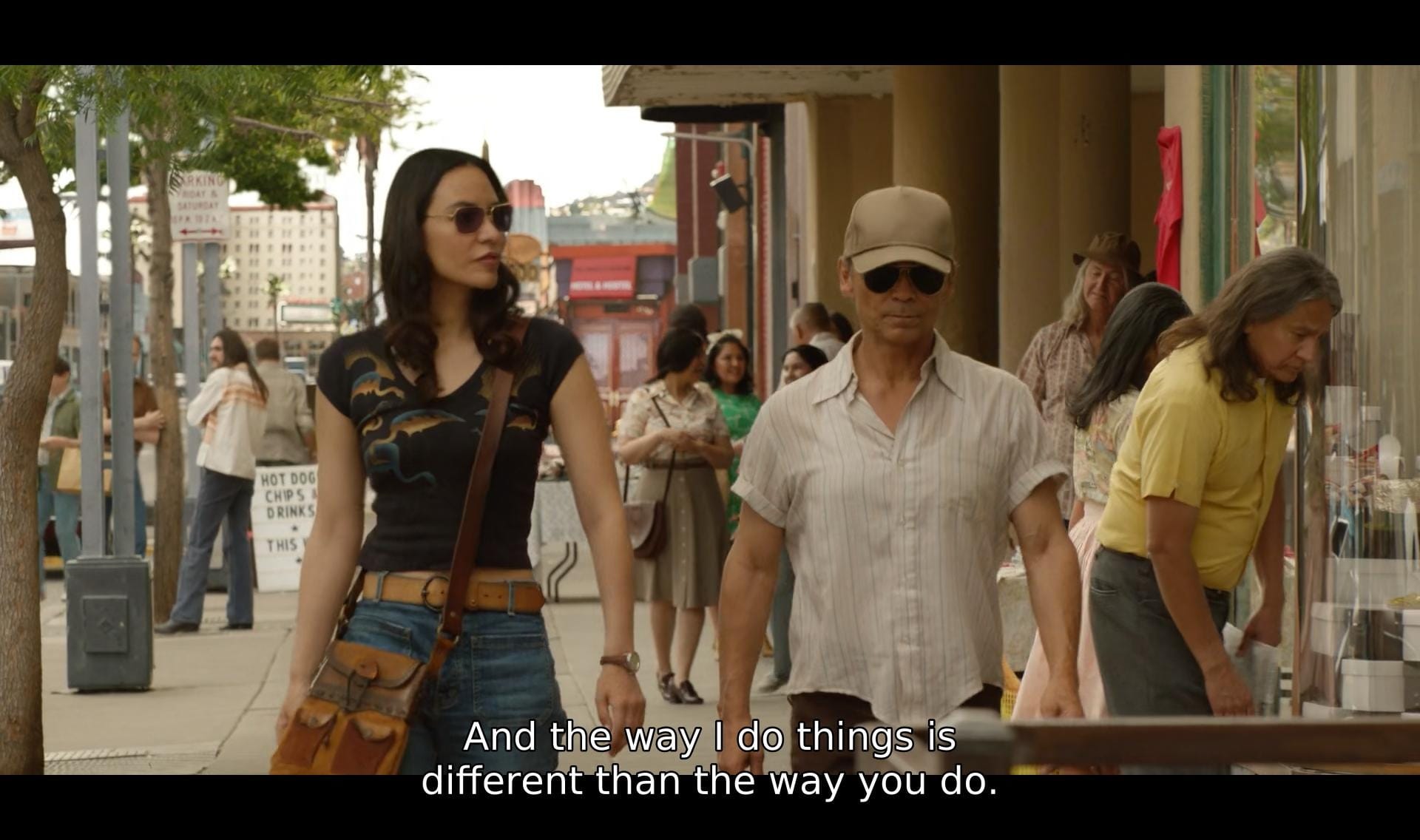
i was really looking forward to season 4 and wasn't disappointed: it's suspenseful, it's emotional, it has character development, even a new setting. the villain is played by franka potente (her grandpa being played by udo kier) which i found odd at first (german actors in dark winds—what?) but that proved to be a good decision. there was a lot of tension and plot twists and i'm excited for another season that is said to be in development.
watson (season 2)
i finished the second season of watson and while there were some weird storylines i overall liked this season.
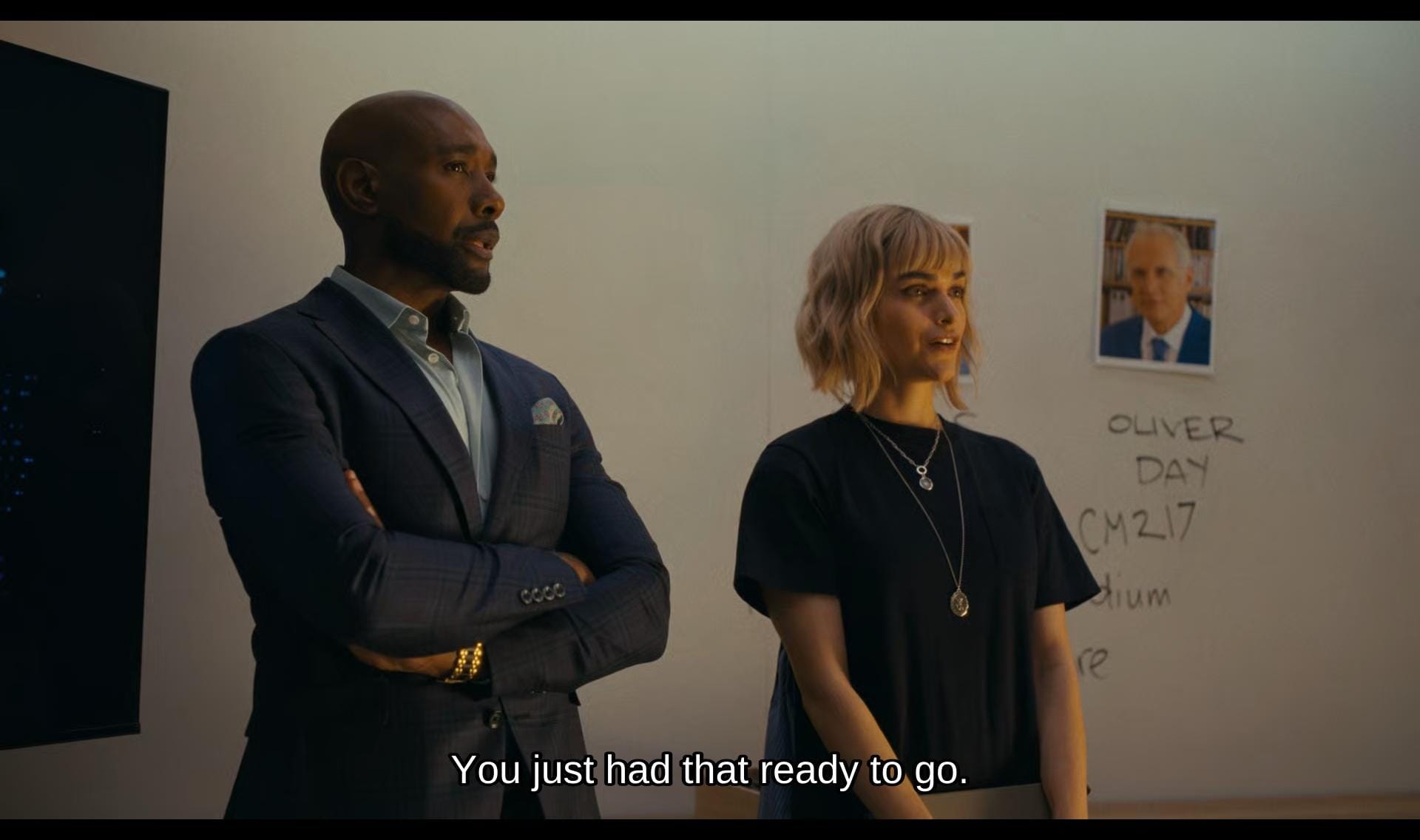
i feel like watson was sort of an odd show anyway, combining medical puzzles and the universe of sherlock with a (minimalist but still) futuristic touch and a slow-burn monster-of-the-week approach. this setup doesn't really call for character development but they still managed to implement it—even if many changes the characters went through happened off-screen. i could have done with the whole hetero romances (and especially the i-still-love-my-ex trope) but i really liked ingrid's development that contrasted the other a-bit-too-normative characters. i'm a little sad that the show won't get a chance to prove its worth. (it got cancelled) but i'm glad it exists and one can still hope for a revival at some point.
ocean vuong - the emperor of gladness
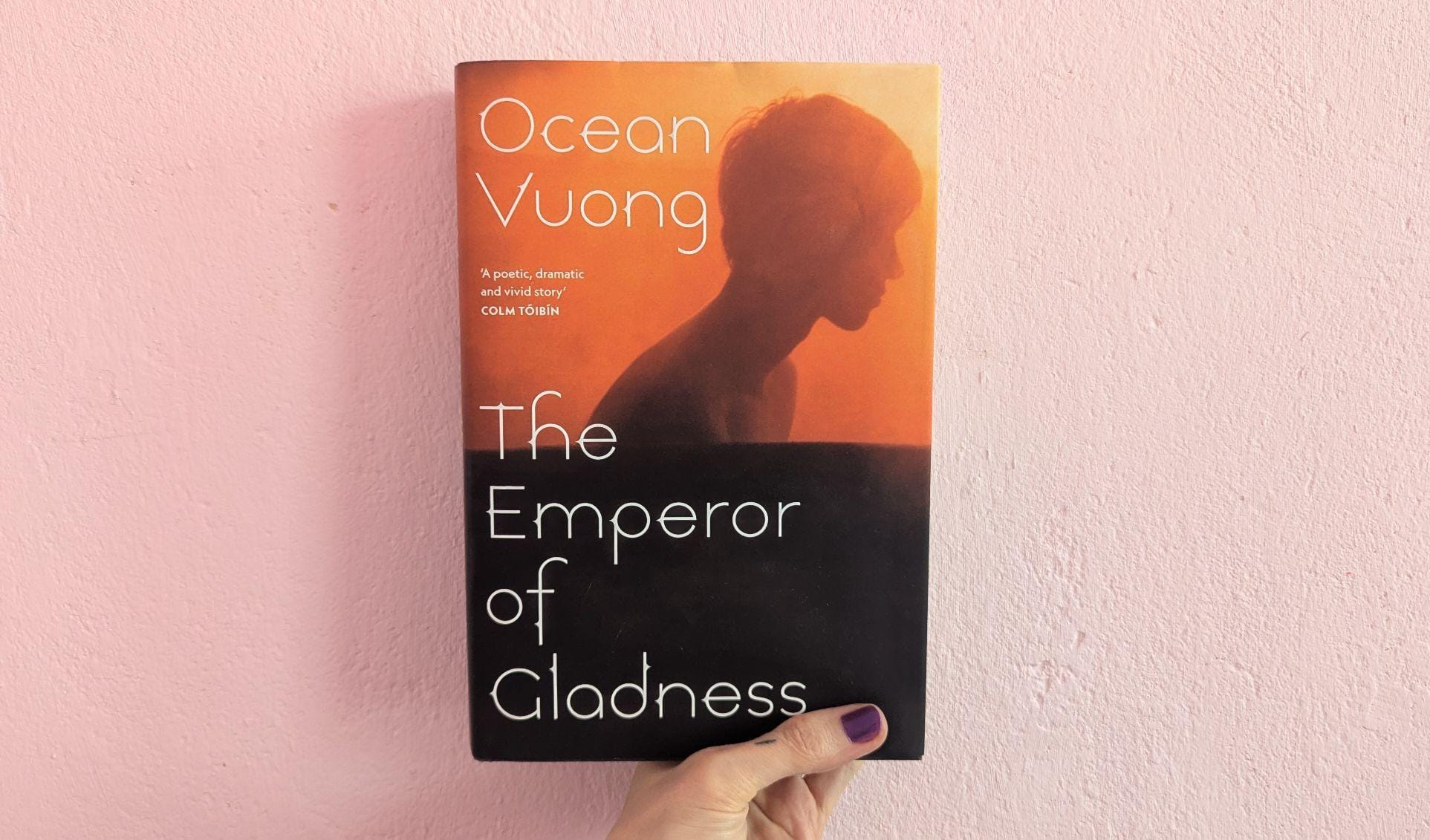
i read the emperor of gladness by ocean vuong and was really touched by the book. it's sad, it's absurd, it's critical of white hetero supremacy and capitalism, it deals with immigration, war, age and illness, disability, poverty/class, racism, substance use, it deconstructs stereotypes, it features a (great) autistic character, a gay vietnamese-american protagonist. i loved everything about it, i cried, i laughed, i've been missing the characters, the home market, hai and grazina, the setting (year 2011, no smartphones).
immediately after i finished the book i fell into a tiny ocean vuong rabbit hole and found out that he had lived with his boyfriend's (now husband's) lithuanian grandma (who was in fact called grazina) back when he was unhoused. she needed someone to assist her as she was affected by alzheimer's disease/dementia, and he needed a place to live. he wrote this book as a tribute to her and i find that really beautiful. he talks about this and other heavy experiences he had (with substance use, for example) in an emotional interview with david marchese that i found on youtube. i also came across an interview on analog photography that features some of his art.
i missed vuong's reading when he was here in berlin but i hope he'll return at some point, maybe with his next publication.
some academic readings
it's my final semester before writing my master's thesis (that's my plan at least) and i've been attending five (text-heavy) courses since mid april. for me, this is a lot as i also work part-time and try to maintain somewhat of a social life (and have some time to myself). i don't even try to do creative work during these months, i'm just glad to finish the assignments on time. anyway, i love the courses i picked as i get different perspectives on the concepts used in gender studies. i'm lucky to attend seminars by some amazing, thought-provoking teachers/scholars such as andrew m. thomas (Black & queer geographies), sofia varino (environmental humanities, feminist science studies), tunay altay (sociology, gender studies), and elo samuel abissa (queer of color critique, cultural studies).
i just want to share the titles of some of the readings i liked most and that i want to read in full (if it's not a paper, the assignment is mostly to read the introduction to a monograph (and one chapter) and i haven't had the capacity to read more than that yet):
- José Esteban Muñoz (1996), Ephemera as Evidence: Introductory Notes to Queer Acts.
- José Esteban Muñoz (1999), Disidentifications: Queers of Color and the Performance of Politics.
- Gayatri Gopinath (2018), Unruly Visions: The Aesthetic Practices of Queer Diaspora.
- Joseph Pugliese (2020), Biopolitics of the More-Than-Human: Forensic Ecologies of Violence.
- Alexis Pauline Gumbs (2020), Undrowned: Black Feminist Lessons from Marine Mammals.
- Jennifer E. Telesca (2020), Red Gold: The Managed Extinction of the Giant Bluefin Tuna.
- Anna Tsing (2015), The Mushroom at the End of the World: On the Possibility of Life in Capitalist Ruins.
- Jason Ritchie (2010), How Do You Say “Come Out of the Closet” in Arabic? Queer Activism and the Politics of Visibility in Israel-Palestine.
- Steven Seidman (1994), Queer-Ing Sociology, Sociologizing Queer Theory: An Introduction.
article on fandom and consumerism
i read an interesting article called "We Might Have To Get A Little Less Fandom-y" by mo drammeh. the author analyzes capitalist and regressive ideologies causing the novel to be perceived and used as a commodity (instead of as a work of art) and fandom to define itself by the level of consumption.
open hardware summit 2026
i attended the open hardware summit 2026 for the first time (it changes locations every year and i didn't get the chance to travel to edinburgh last time). it was a hot sunday and i had a bit of trouble finding the location (the mathematics building at the tu berlin plus the rooms where the things i wanted to see were happening), but i asked some people for help, so it was all good.
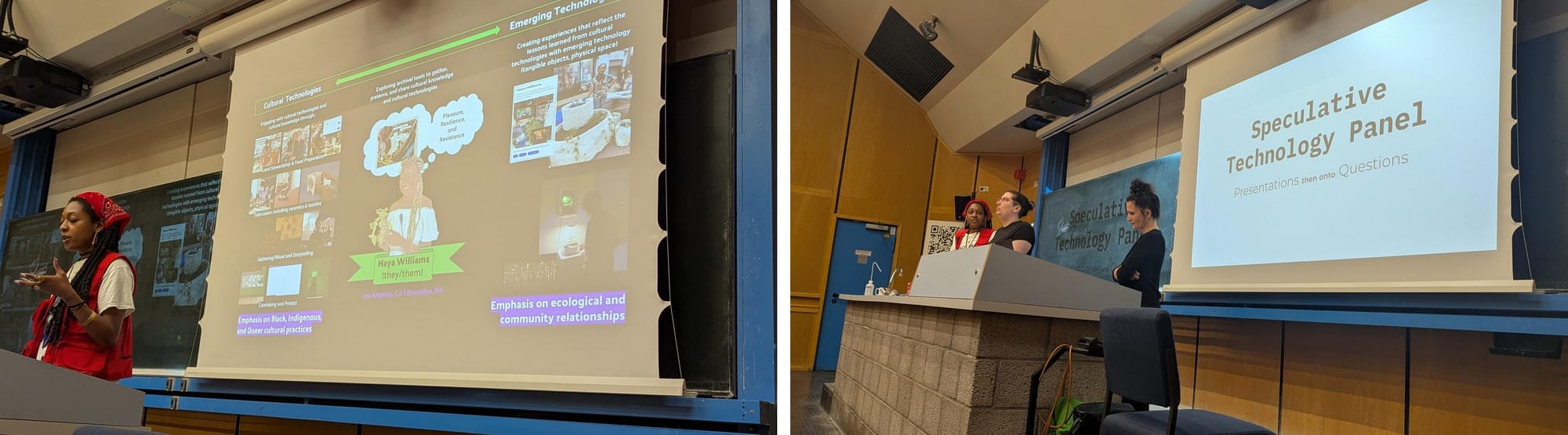
first, i got to see a discussion/lecture on "speculative hardware" (or as the slides say: "speculative technology"). it was really inspiring to see maya williams, izzie colpitts-campbell, and mónica rikić on stage talking about their practices combining science, queer studies, art, and technology.
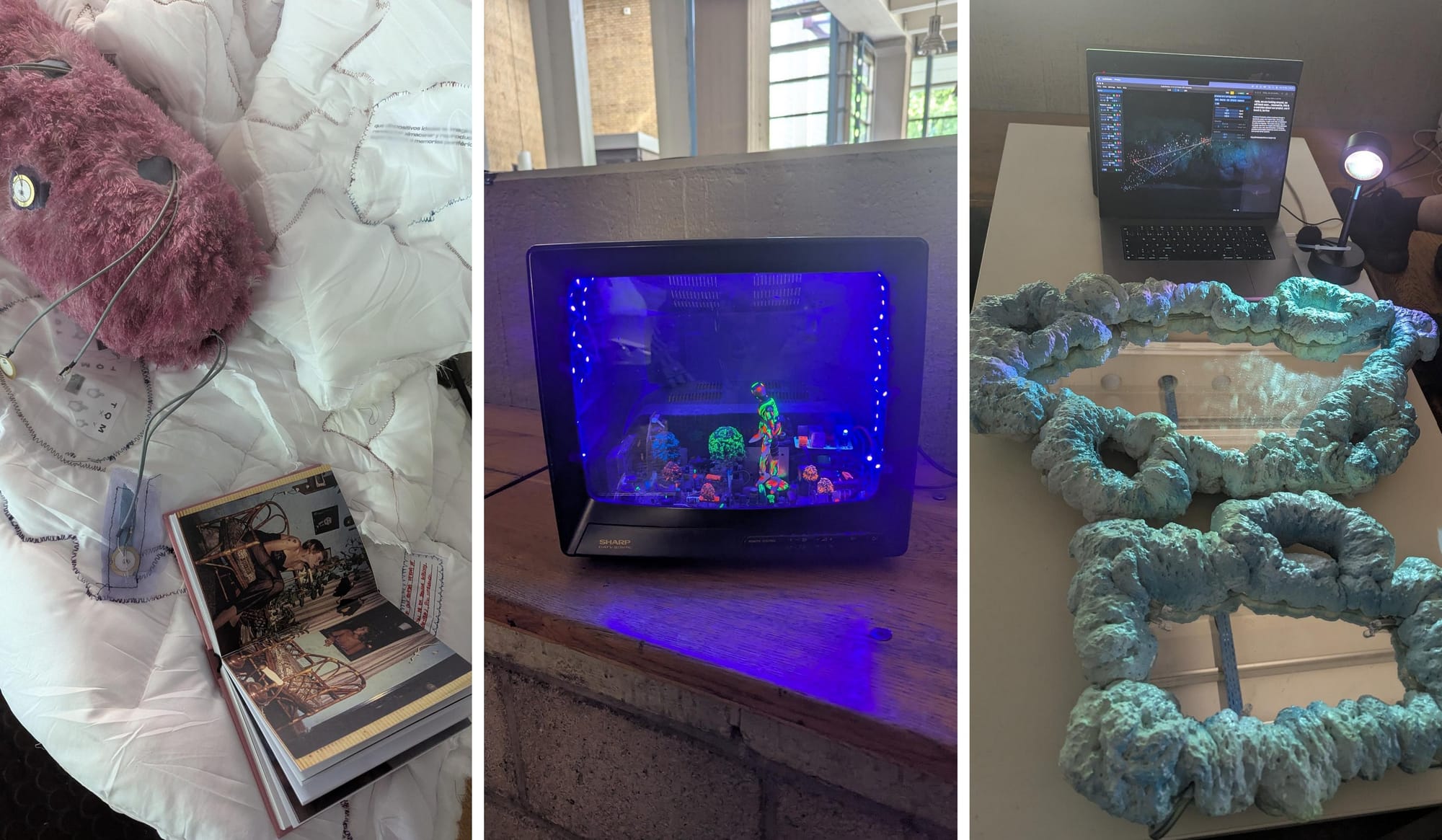
i then went on a tour to check out the art gallery. i especially liked "fantasias perifericas" by tati cuoco, daniela guevara, xyamm angel, & candie because it spoke to me personally, from the aesthetics to the materials to the philosophy (and the artists were super nice). here's the synopsis to their project:
Peripheral Fantasies softens hardware through a decolonial, queer, and migrant lens. Using open-source Audiostellar, it maps audio into constellations for collective listening. The project weaves migrant and queer narratives to imagine alternative interfaces—tools for care, rest, and connection—challenging dominant technologies shaped by control, extraction, and survival-driven systems.
"fixation" by eirini tampasouli was also a cute one. i like crt monitors, blacklight, and still lives. this is the description of the project:
Fixation is a 3D object displayed on a monitor mixed with painted elements that reacts to the sound of the environment through a microphone. It constitutes a hybrid facial form that integrates traditional artistic techniques, such as painting, with contemporary media technologies, raising questions about the medium itself and exploring how identities and modes of representation can be reinvented in the age of digital technologies.
some impressions:
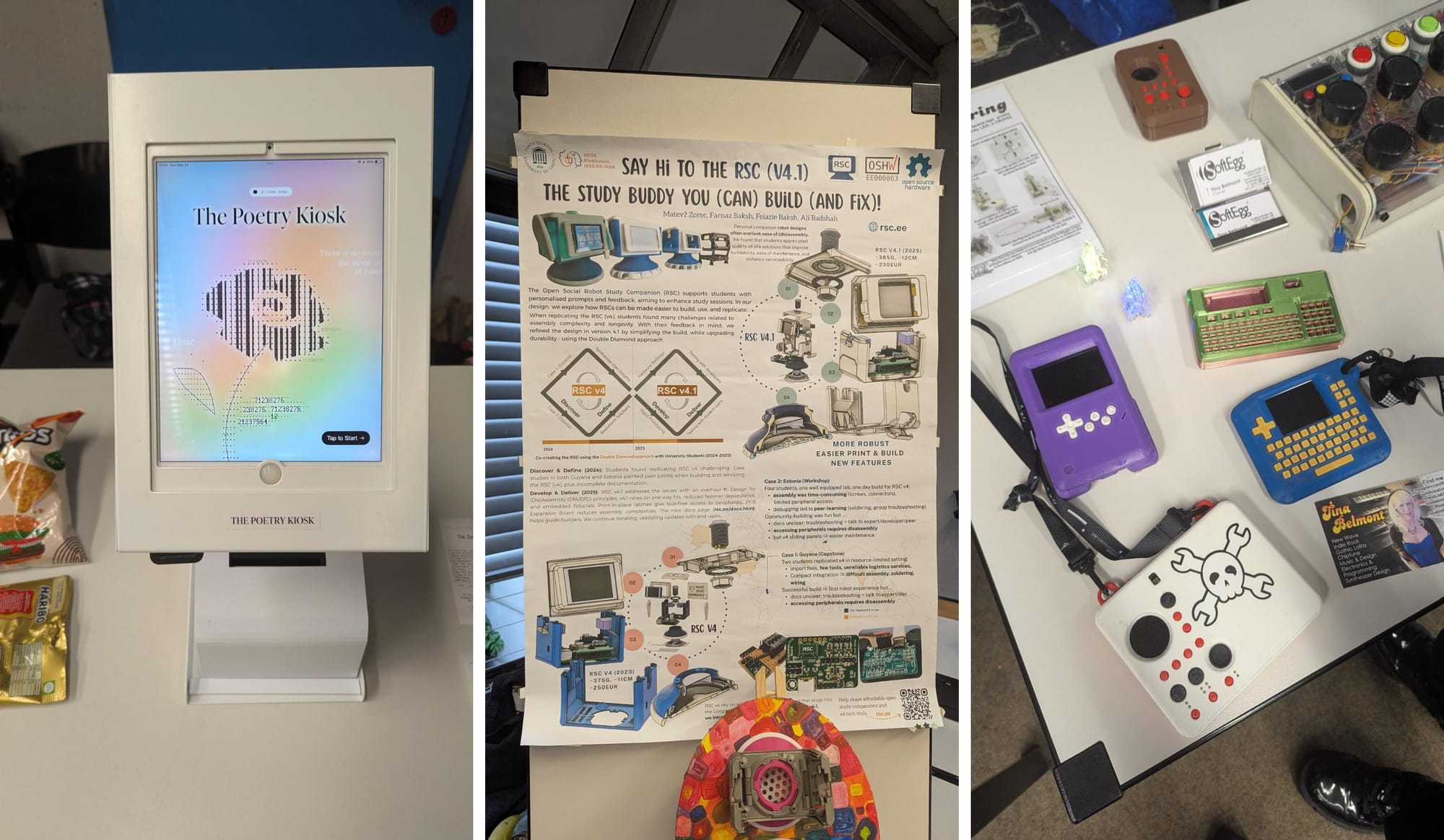
i then went on to see the exhibits. there was a lot to see, but what i liked most was the poetry kiosk (by sihan zhang), the openrsc (by farnaz baksh & matevž zore, and the game console music instruments (by tina belmont):
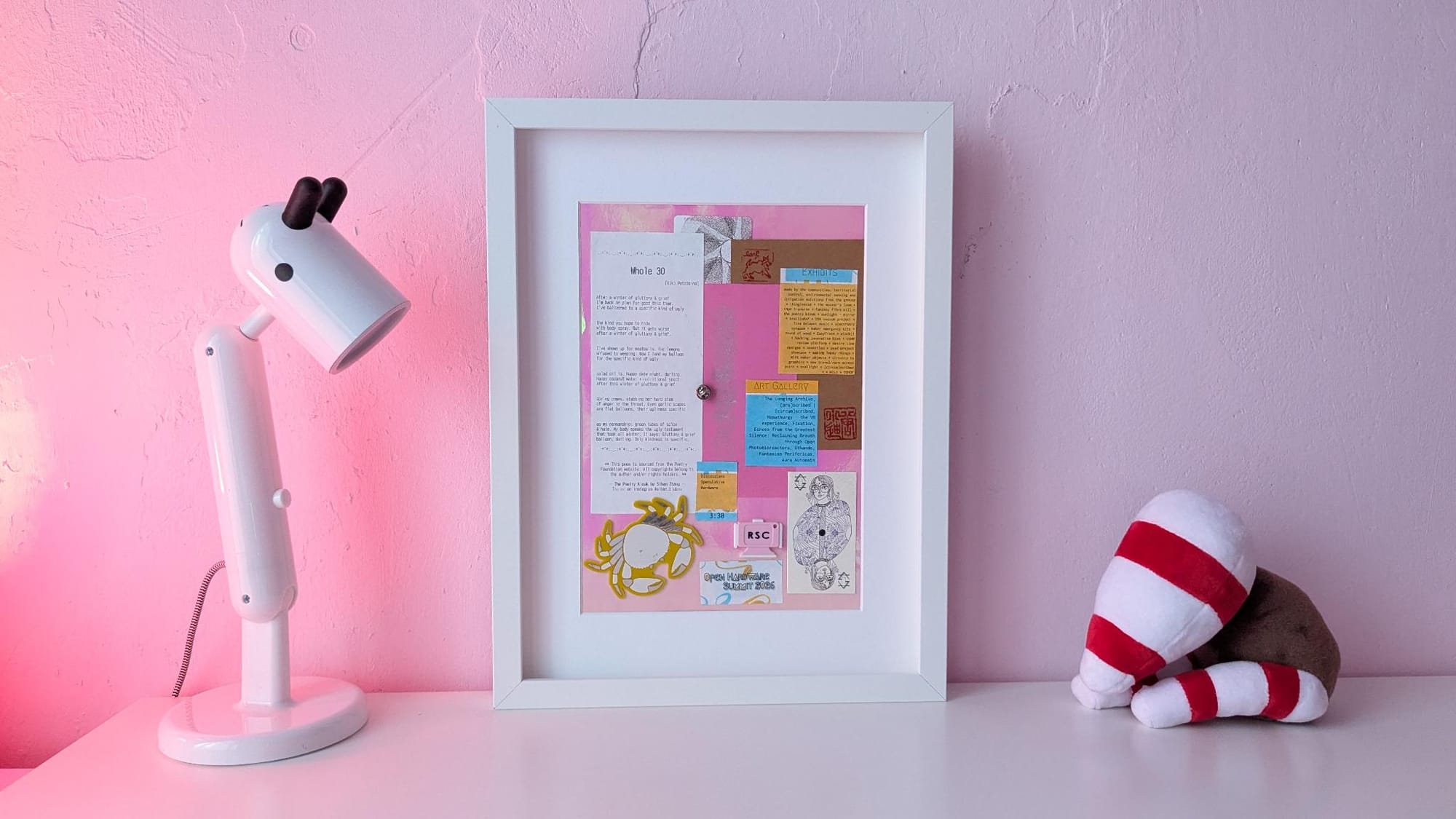
i even made a little collage afterwards from the gimmicks i took with me. artists featured:
sihan zhang
khandoker upama kabir
farnaz baksh & matevž zorec
leeborg
alice tang
bleeptrack
thomas megel
a maze. 2026
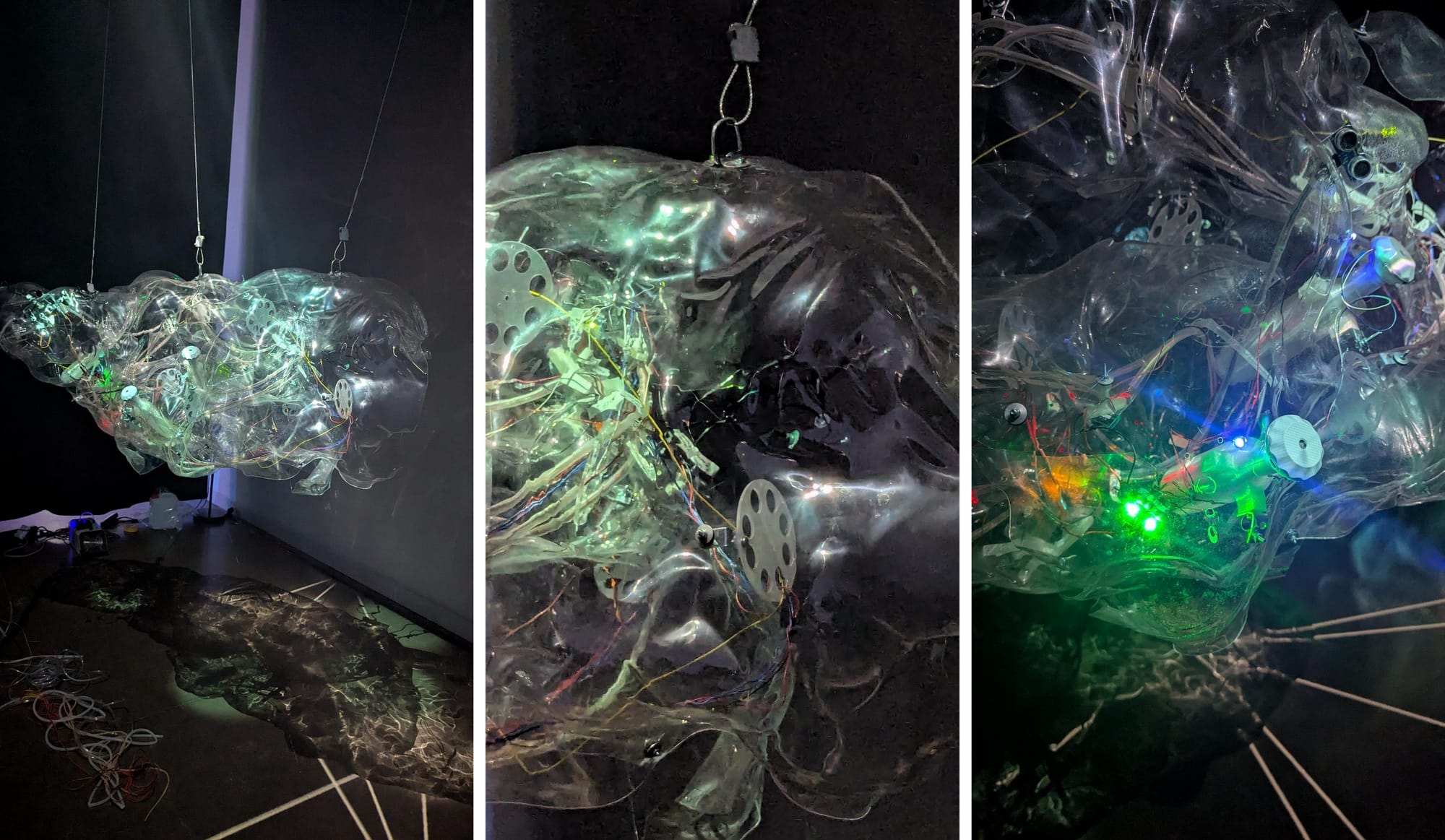
i also attended the a maze. festival. i was pretty exhausted on that day, but i still had a great time discovering games and a mesmerizing art installation called "unsettled" by cuerpos migrantes. the description reads:
Unsettled is an interactive art installation that explores the dynamics of human and marine migration as a vital force flowing through both bodies and natural systems. Developed in Barcelona by Martina Teigeiro, Verónica Sabat, and Cristina Planas, the project draws from their personal experiences as Latin American migrant women to investigate how the unfamiliar transforms and weaves itself into a new environment. The installation creates a poetic parallel between these human trajectories and the biological migrations of marine organisms in the Mediterranean, presenting the ocean as a fluid, borderless metaphor for a shared condition of life. The work functions as a living system that reacts organically to the audience’s presence through a hybrid of art, science, and digital technology. A central suspended sculpture, equipped with sensors and fog generators, simulates a breathing organism that observes and reacts to visitors. This immersive environment is further enriched by laser beams and videomapping that symbolize the tension of contact, expanding or contracting to represent acceptance or rejection, while a quadraphonic soundscape blends ocean recordings with fragments of migrant interviews. By intertwining scientific knowledge with sensory experience, Unsettled makes the invisible processes of adaptation and coexistence tangible, ultimately encouraging empathy and a deeper reflection on what it means to negotiate space, identity, and belonging.
i think i looked at and listened to this amazing work of art for at least 25 minutes.
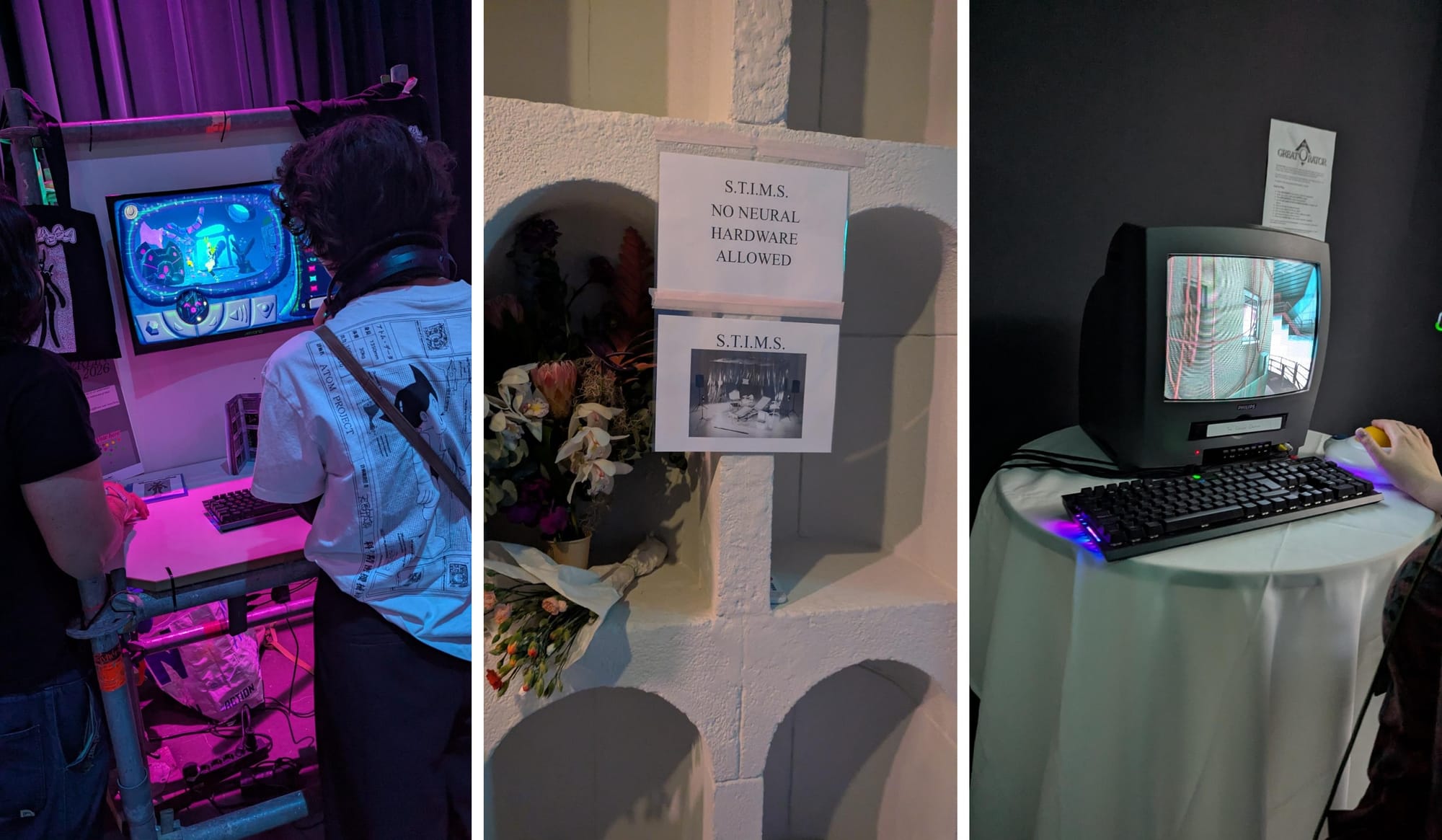
interestingly, i liked to photograph anachronistic exhibits... i liked the work of meia calça ("panthalassa"), sickness international ("flesh network"), and the shoebox diorama ("the great orator"):
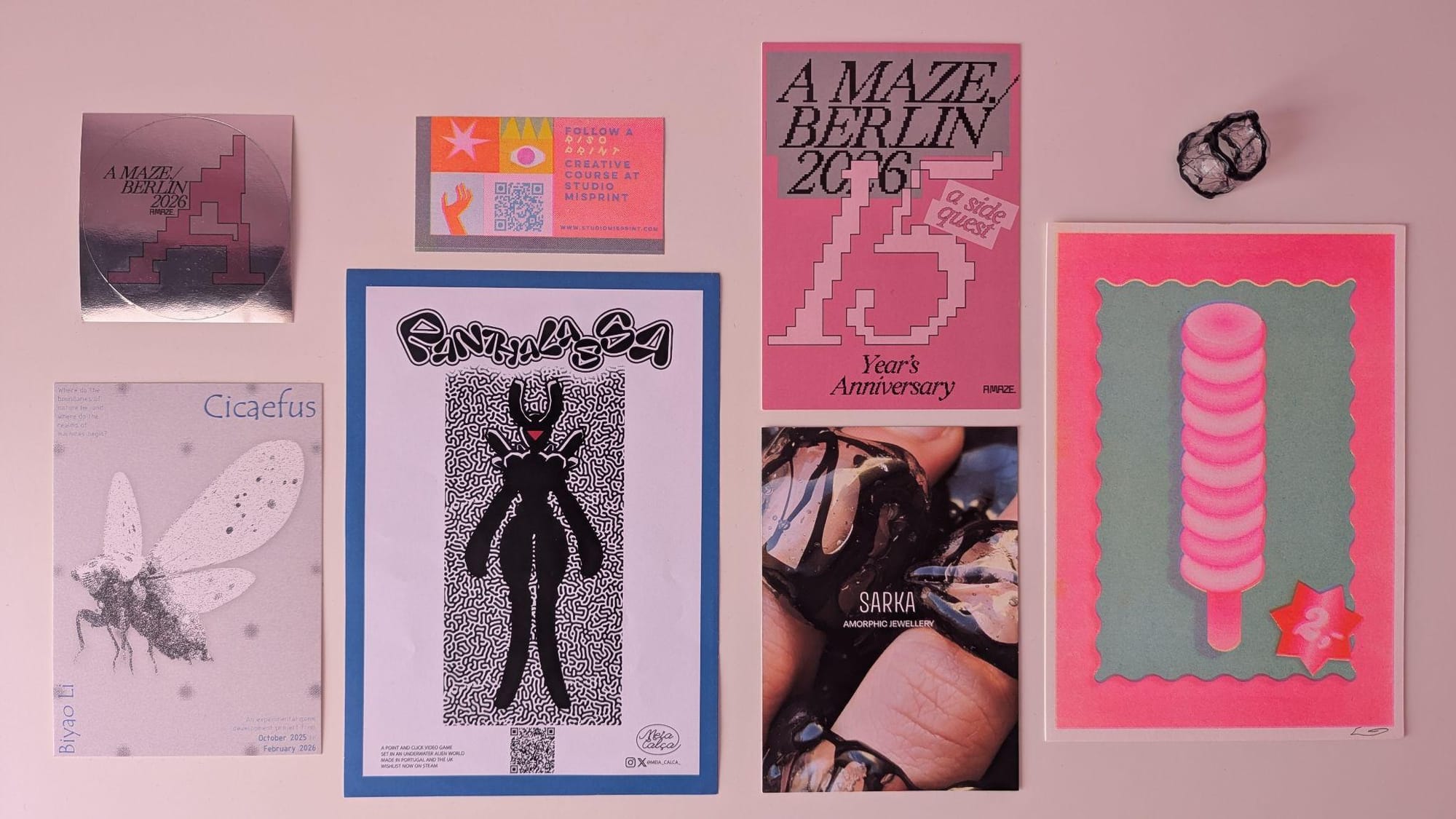
i got some things, among them postcards, stickers, an amorphic ring, and a riso print of a popsicle (i don't have the artist's name, unfortunately).
handpoke
[note: the image below shows me at work with a tattoo needle (non-graphic, no blood). it's the end of the article, so you won't miss any content if you decide not to scroll down to see the picture.]
i did my first handpoke tattoo on a person other than myself! lucie wanted a rabbit hole and we were brainstorming and sketching together. the result was a hole with a ladder and i handpoked the design upside-down to give it a little twist (on lucie's request).
i used two round liner long taper needles: a 3003rllt for the line work and a 3011rllt for filling.
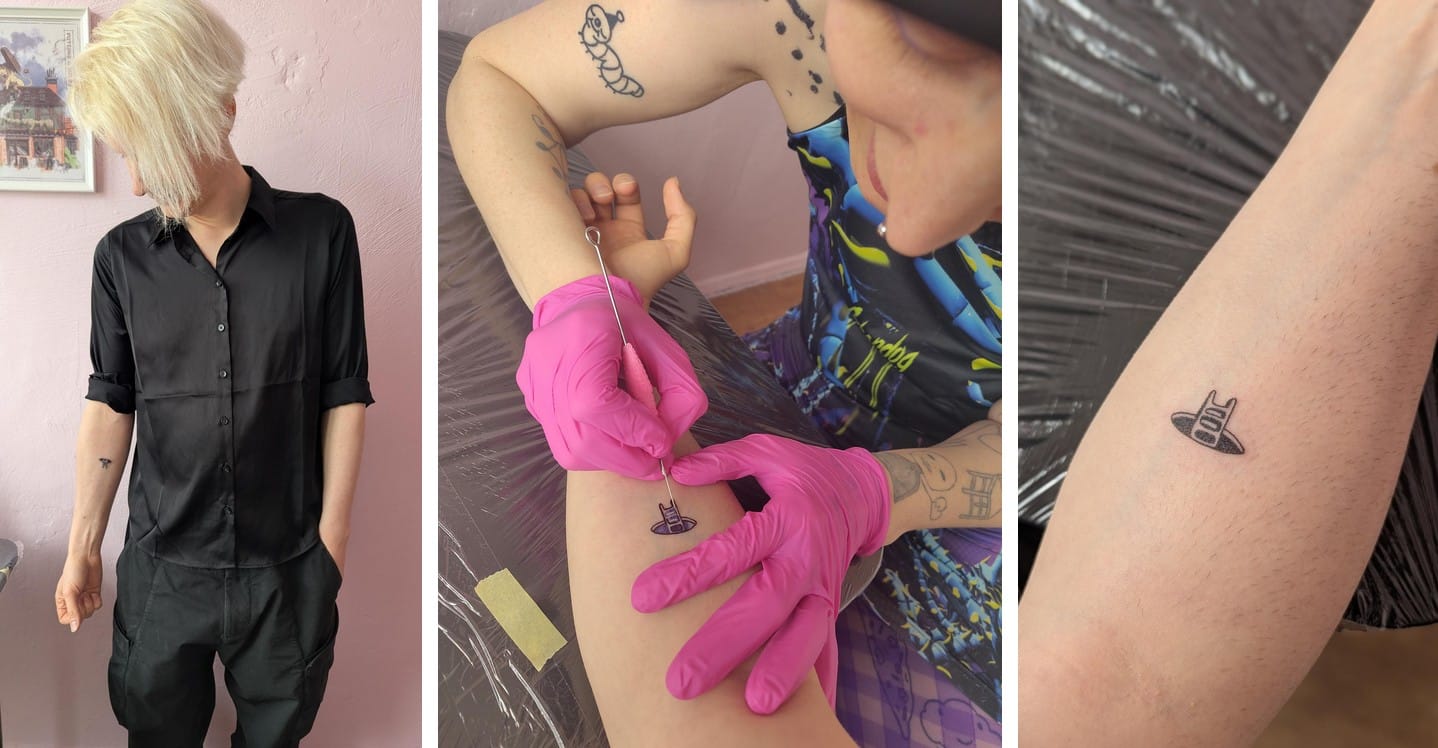
i really like the outcome and it's healing well, so i'm thinking about offering small handpoke tats to friends and friends of friends. i'll draw some flash designs when i have the time and will probably share them in the next episode of "what i did".